

The Ultimate Guide to Solo City Travel Experiences
Practical tips for planning solo city trips—choose safe walkable neighborhoods, build tailored itineraries, find hidden gems, and dine solo confidently.
By Martin Zokov
• 12 min read
Traveling solo in cities is all about freedom and independence. You control your schedule, pace, and experiences without needing to compromise. This guide covers everything you need to know, from picking the right city to planning your itinerary and staying safe. Here's a quick summary:
- Best Cities for Solo Travel: San Francisco, New York, Portland, Washington, D.C., and Seattle stand out for their safety, walkability, and variety of activities.
- Planning Tools: Use Funizy to create personalized itineraries with ease.
- Safety Tips: Plan transit routes, stay in well-lit areas, and use apps to share your location.
- Hidden Gems: Visit local markets, scenic parks, and participate in group activities like walking tours or workshops.
- Dining Solo: Try counter seating at restaurants and local food markets for a relaxed experience.
Whether you're a first-timer or an experienced solo traveler, this guide will help you make the most of your trip with practical advice and tips. Ready to take control of your next adventure? Let's dive in.
Top 5 Cities for Solo Travel in the U.S.
sbb-itb-27c3d16
Choosing the Right City for Solo Travel
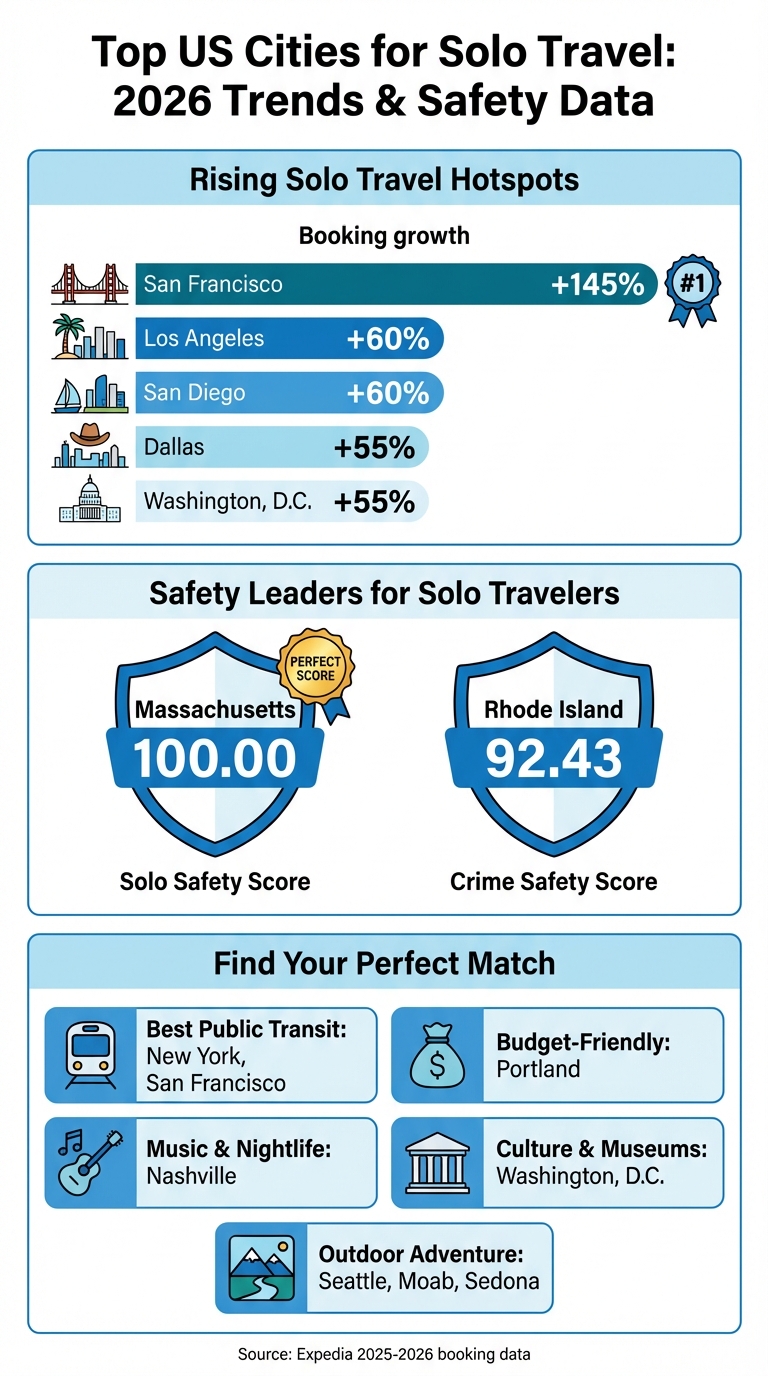
Top US Cities for Solo Travel: 2026 Booking Trends and Safety Scores
What Makes a City Good for Solo Travelers
Not all cities are equally suited for solo travelers, and a few key factors can make all the difference. Safety and ease of getting around are at the top of the list. For instance, Massachusetts boasts a perfect Solo Safety Score of 100.00, while Rhode Island leads with a crime safety score of 92.43. These stats highlight destinations where you can explore with peace of mind.
Walkability and public transit also play a huge role. Cities like San Francisco, with its iconic cable cars, and New York, featuring an extensive subway network, make it easy to get around without needing a car. This kind of flexibility means less time worrying about logistics and more time soaking in the experience.
Another important aspect is a balanced social vibe. The best cities offer a mix of cozy spots for solitude and lively venues where you can meet people naturally. Think restaurants with bar seating, bustling food markets, or live music venues. Portland’s quirky charm and Chicago’s famously friendly atmosphere are great examples of cities that strike this balance.
Finally, activity density matters. A good solo travel destination packs a variety of experiences - parks, museums, food scenes, and landmarks - into a compact area. Cities like New York (Central Park), Seattle (Pike Place Market), and Washington, D.C. (Smithsonian museums) offer this kind of variety, making it easy to craft a trip full of memorable moments.
Best US Cities for Solo Travelers
When it comes to solo travel, California is leading the charge. In 2026, the state claimed the top three spots for solo travel destinations. San Francisco, in particular, became the #1 trending U.S. city for solo travelers, with Expedia reporting a 145% increase in single-person hotel bookings during late 2025. Mayor Daniel Lurie summed up its appeal:
"There is so much to see and do in San Francisco - we have some of the best restaurants, the most beautiful parks, and the most exciting neighborhoods in the country."
San Francisco’s walkable neighborhoods, historical sites like Alcatraz, and stunning natural scenery make it a dream city for independent travelers.
Los Angeles and San Diego followed closely, each seeing a 60% rise in solo bookings. Both cities cater to those seeking a mix of urban attractions and outdoor adventures. Meanwhile, Dallas and Washington, D.C. experienced 55% increases in solo travel interest. Washington, D.C., in particular, is a haven for activity lovers, offering free Smithsonian museums, iconic monuments, and walkable areas like Georgetown.
New York City remains a classic choice for solo travelers. Here, dining alone or wandering through museums is completely normal, thanks to the city’s culture of independence. Its public transit system and dense collection of attractions - from Broadway to Central Park - make it a solo traveler’s paradise.
Budget-conscious travelers often head to Portland, where urban culture meets affordable outdoor activities. Highlights include Powell’s City of Books and scenic nature spots, though having a car can be helpful for day trips. Music fans flock to Nashville, where live music venues along Broadway provide plenty of opportunities to connect with others.
For those craving a mix of city life and outdoor beauty, Seattle combines urban energy with breathtaking surroundings. Adventure seekers might prefer Moab, Utah, or Sedona, Arizona, both of which offer safe, scenic settings for hiking and wellness-focused activities. Each of these cities has its own charm, so the key is finding the one that aligns with your interests. Once you’ve picked your destination, you can start planning the perfect trip with Funizy.
Creating Your Itinerary with Funizy
Once you've picked your dream destination, it's time to plan an adventure that's all about you. With Funizy, you can create a travel itinerary that fits your style and interests, all in just a few minutes. This tool makes planning quick and easy, so you can spend less time organizing and more time exploring.
Setting Your Preferences in Funizy
Start by telling Funizy about your travel preferences. Do you love walking tours, indulging in local cuisine, shopping, or sightseeing? Add details like your budget and travel dates, and let Funizy's AI do the rest. It suggests activities that match your interests, even uncovering off-the-beaten-path spots that most guidebooks miss. You'll get a draft itinerary that's ready to tweak and make your own. For now, the tool focuses on one day at a time, but multi-day planning features are on the horizon. This way, every solo trip feels tailored just for you.
Working with Funizy's Interactive Map
Funizy's interactive map is a game-changer for visualizing your day. After picking your destination, the map highlights clusters of attractions, restaurants, and shops near each other, helping you cut down on unnecessary travel time. This feature is especially handy for solo travelers, ensuring you stay in safe, walkable areas while exploring a new city. Plus, it organizes all your trip details - like flight info, hotel bookings, and restaurant reservations - into a single downloadable file for offline access.
Understanding Funizy's Token Pricing
Funizy uses a token-based payment system that’s simple and upfront. You pay once and gain lifetime access - no subscriptions required. Tokens are used to generate plans, and pricing is straightforward:
- 10 tokens for $5.00
- 50 tokens for $10.00
- 100 tokens for $15.00
If you're heading out for a quick weekend getaway, the 10-token pack might be perfect. Frequent travelers, on the other hand, can save more with the larger bundles. As Dan Recommends puts it:
"More tokens unlock additional plans and access to niche, hidden gems"
Once you've got your tokens, you can dive into Funizy's planning tools without worrying about extra fees. It’s all about giving solo travelers the freedom to create their perfect trip.
Staying Safe and Getting Around
Exploring a new city on your own doesn’t have to feel intimidating. The trick is to plan ahead and stay mindful of your surroundings. Travel content creator Beck Sharron sums it up perfectly:
"Danger is contextual. It's not in the places you go – it's in the choices you make when you get there."
Smart decisions begin even before you step out your front door.
Using Public Transit and Maps
Plan your routes in advance. Familiarize yourself with the names of stops, transfer points, and which transit lines operate reliably, especially late at night. Some lines run 24/7, while others slow down after 10 PM, which can make them less convenient for solo travelers. Michelle King from UCLA Transportation offers this advice:
"To eliminate risk in waiting at a stop alone for extended periods of time, try to check the arrival of the bus, train, or subway and stay indoors in a public place until just before arrival to ensure you will be waiting for the minimal amount of time."
Offline maps, like Maps.me, can be a lifesaver, especially when you’re trying to avoid pulling out your phone on busy streets. If you need to check directions, step into a shop, café, or hotel lobby. On public transit, choose a seat near the driver or in a crowded carriage, keep your bag on your lap with zippers closed, and wear just one headphone to stay alert.
Share your travel plans and estimated arrival time with someone you trust using apps like Find My (Apple), Life360, or WhatsApp. Keep your phone charged and consider using a lanyard in crowded areas to avoid theft. If you’re using rideshares, wait indoors until your driver arrives, double-check the license plate against the app, and ask the driver who they’re picking up instead of offering your name. For street taxis, it’s safer to have hotel or restaurant staff hail one for you. If something doesn’t feel right, trust your instincts - move seats, alert the driver, or get off at the next well-lit stop.
Once you’ve mastered transit safety, apply these same principles when selecting neighborhoods and accommodations to ensure a secure stay.
Finding Safe Neighborhoods and Places to Stay
Choosing the right neighborhood and accommodation is just as important as planning your transit routes. Opt for areas with well-lit streets and steady foot traffic, even after dark. Look for lodging within a short walk (3–6 minutes) of major transit stations that connect directly to key attractions. This reduces the need to navigate quieter, less populated areas. Residential neighborhoods like New York City’s Upper West Side offer a peaceful, walkable vibe, while central areas like Midtown are bright and conveniently located.
Before booking, read reviews from other solo travelers and prioritize places with 24/7 staff. Request a room on the second floor - this provides added security while still allowing for a quick exit in emergencies. Once you’ve checked in, identify nearby "safe havens", such as 24-hour stores or cafés, where you can go if you feel uneasy. At night, stick to well-lit main streets and avoid cutting through empty side alleys.
Secure your room with a portable doorstop or wedge and cover the peephole with black tape for extra privacy. Spread out your cash and cards across multiple secure locations, like your wallet, hotel safe, or a hidden pouch. Protect your devices by using a VPN and enabling two-factor authentication. If you’re a US citizen, enroll in the Smart Traveler Enrollment Program (STEP) for safety updates and embassy support in case of emergencies. Modern smartphones and smartwatches with satellite calling or SOS mode can also help you reach emergency services, even without cell reception.
Finding Off-the-Beaten-Path Experiences
Some of the most memorable solo adventures happen when you step away from the usual tourist spots and explore places that locals frequent. Timing plays a big role here. For instance, visiting popular historic areas early in the morning - before 9:00 AM - lets you enjoy the peace and quiet before the crowds roll in. Look for attractions with a history of reinvention, like Barcelona's Bunkers del Carmel, which sits atop an old anti-aircraft battery and offers stunning city views at sunset. Another example is Paris's Promenade Plantée, an elevated parkway filled with roses and lavender, built on a former railway viaduct. It’s a serene escape above the bustling streets.
Explore pedestrian-friendly neighborhoods away from the main tourist hubs. Areas like Gràcia in Barcelona, Belleville in Paris, and Joo Chiat in Singapore reveal authentic local life and charm, all within a walkable distance [1, 18, 19]. Joining local Facebook groups before your trip can also lead to hidden gems and insider tips from residents. Next, let’s dive into how local food, parks, and group activities can elevate your solo journey.
Trying Local Food and Restaurants
Skip the tourist traps and head to local markets for a more authentic dining experience. Market bars, like those at Mercat de Sant Antoni in Barcelona, are perfect for solo travelers, offering casual seating and a chance to observe daily life. Look for eateries with steady local traffic, menus written in the local language, and daily specials on chalkboards. Ordering the "menú del día" (a three-course lunch costing around $13 to $20) is a great way to sample local cuisine without breaking the bank.
When seeking recommendations, get specific. Instead of asking for "good restaurants", try asking service workers, "Where do you eat on your day off?" As Creative Director Estée Lalonde notes:
"Dining alone isn't as uncommon as you might imagine. I personally find it empowering!"
Visiting markets early in the morning is another way to connect with the local food scene. You’ll see what’s fresh and valued by residents, as many traditional dishes start with early-morning market finds. If you have dietary restrictions, carrying a translated card can make communication easier in non-English-speaking places.
Relaxing in Parks and Gardens
Urban areas often hide peaceful retreats if you know where to look. Singapore’s Bukit Timah Nature Reserve, for example, offers lush trails ideal for jogging or quiet nature walks. In Copenhagen, the courtyard at the Designmuseum Danmark features a tranquil garden lined with linden trees and sculptures, providing a perfect spot to unwind between activities. These calm spaces let you recharge without the need for constant interaction.
Meeting People Through Group Activities
While solo travel offers plenty of quiet moments, connecting with others can add depth to your experience. Free walking tours are a fantastic way to meet people organically. These tours typically operate on a tip-only basis (around $5–$10 per person), and many guides invite groups to join them for drinks afterward, creating opportunities for new friendships. Specialized tours focusing on street art, history, or local cuisine can help you connect with others who share your interests [1, 19].
Language exchange events at local bars are another great way to meet residents in a relaxed setting. Signing up for short workshops - like mosaic making, ceramics, or cooking classes - offers a natural way to bond over shared activities [1, 19]. Solo diners may also find wine bars or bistros with counter seating to be inviting spaces for casual conversation. For a more intimate vibe, smaller venues like under-100-seat theaters or jazz bars often make mingling easier than larger festivals.
Conclusion
Traveling solo in a city offers a kind of freedom that's hard to match. You get to plan your day exactly how you want - no compromises, no negotiations. From picking destinations with reliable public transit and good safety ratings to using tools like Funizy to create flexible and balanced itineraries, you've got the foundation for exploring cities like a pro. Along the way, you'll discover hidden gems that go beyond the typical tourist spots, and you'll gain skills that stick with you long after your trip - like navigating tricky subway systems, dining solo with confidence, and trusting your gut in unfamiliar neighborhoods.
If you're just starting out with solo travel, shorter trips are a great way to ease into the experience. A 3–5 day getaway can help you build confidence before diving into longer adventures. Cities like Lisbon, Montreal, or Kyoto are excellent choices for first-timers, offering friendly vibes and well-organized infrastructure. And yes, feeling a little lonely now and then is totally normal. A quick fix? Join a free walking tour or sign up for a cooking class. These activities not only lift your mood but also open the door to meeting new people and creating memorable connections.
Once your itinerary is ready and safety measures are in place, you're all set. Tools like Funizy for planning, offline maps for navigation, and smart budgeting will keep you on track. Speaking of budgets, remember that costs vary - daily expenses might range from $25–$50 in Southeast Asia to $80–$150 in Scandinavia. But no matter the destination, the essence of solo travel stays the same: you're in control of your journey.
Now, the world is yours to explore. Book that flight, pack light, and dive into the adventure waiting for you. You've got everything you need to make it unforgettable.
FAQs
How do I pick the safest area to stay in?
When picking a neighborhood to stay in, go for places that are well-lit, have plenty of foot traffic, and are simple to navigate - especially after dark. Choose areas that feel comfortable, easy to explore, and welcoming for solo travelers. Steer clear of poorly lit or deserted streets, and always trust your gut if something feels off. Staying aware of your surroundings and prioritizing safety and convenience will make all the difference.
How many Funizy tokens will I need for my trip?
Currently, there isn’t detailed information on how many Funizy tokens you’ll need for your trip. To find out, check your account or reach out to Funizy support for assistance.
What’s the best way to meet people without feeling awkward?
To meet people without feeling awkward, focus on activities that naturally bring people together. Options like group tours, local events, or shared experiences - such as classes or meetups - create an environment where conversations happen more naturally. These settings take the pressure off one-on-one interactions, making it easier to connect with others.