

15 Tips for Creating the Perfect Travel Itinerary
Step-by-step tips to build efficient, flexible travel itineraries—covering goals, budgeting, transport, safety, and planning apps.
By Martin Zokov
• 25 min read
Planning a trip? A great travel itinerary saves time, reduces stress, and ensures you make the most of your vacation. Here are 15 practical tips to help you organize your trip efficiently:
- Set Travel Goals: Define what you want to experience - adventure, relaxation, food, or culture.
- Research Destinations: Check weather, local customs, and schedules to avoid surprises.
- Budget Wisely: Break expenses into categories and include a 15–20% buffer for unexpected costs.
- Prioritize Key Attractions: Focus on must-see spots and group nearby activities to save time.
- Plan Transportation: Choose a central base and consider transit passes or car rentals.
- Schedule Rest: Balance busy days with downtime to avoid burnout.
- Match Your Style: Align the itinerary with your travel pace and interests.
- Use Tools: Apps like TripIt or Funizy help organize plans and booking details.
- Leave Buffer Time: Plan only 60–70% of your day to allow for flexibility.
- Stay Organized Digitally: Keep all confirmations and maps accessible offline.
- Prepare for Safety: Carry emergency contacts, local numbers, and travel insurance.
- Book in Advance: Reserve flights, accommodations, and popular attractions early.
- Create a Daily Schedule: Divide days logically and tackle major activities early.
- Review Plans: Double-check logistics, operating hours, and transit times.
- Stay Flexible: Be ready to adjust plans for unexpected changes.
These tips ensure a smoother, more enjoyable trip. Start with clear goals, research thoroughly, and leave space for spontaneity. Your itinerary should guide your adventure, not control it.
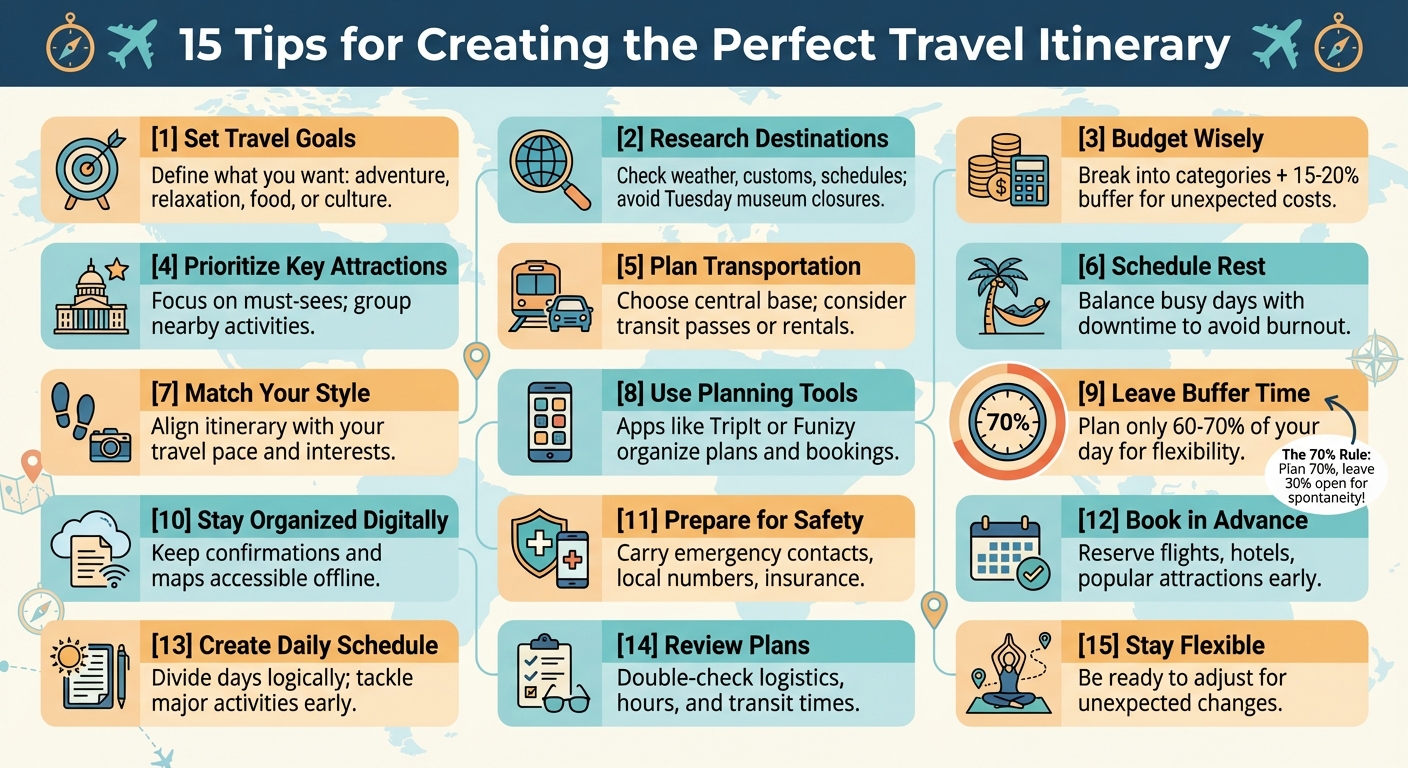
15 Essential Tips for Creating the Perfect Travel Itinerary
How To Create The BEST Travel Itinerary
sbb-itb-27c3d16
1. Identify Your Travel Goals and Preferences
What do you want from this trip? This simple question sets the tone for everything else. Are you craving adventure, relaxation, great food, or a deep dive into history? Your travel style isn’t just a minor detail - it shapes your entire itinerary.
Start by pinpointing your "non-negotiables" - the experiences you absolutely don’t want to miss. Maybe it’s watching the sunrise over the Grand Canyon or indulging in authentic deep-dish pizza in Chicago. Jot these down first and let them guide the rest of your planning. This way, you avoid the common pitfall of trying to "do it all", which often leads to exhaustion and disappointment. Once you’re clear on your travel priorities, everything else will fall into place.
Be realistic about your energy levels. Some people thrive on packed days filled with sightseeing and walking miles, while others need slow mornings with coffee and a good book before heading out. If you’re traveling with others, remember that everyone’s stamina varies. What feels like the perfect day to one person might leave someone else completely drained.
Here’s a tip: follow the 70% Rule. Plan for only 70% of your time, leaving the other 30% open for rest, spontaneity, or those unexpected moments that often become the highlight of a trip. This balance helps avoid over-scheduling while allowing room for surprises.
Finally, think about how structured you want your trip to be. Do you like having every detail mapped out, or would you rather keep things flexible? Some travelers thrive on a detailed itinerary, while others prefer to leave space for exploring and unplanned opportunities. Neither approach is wrong - what matters is choosing the one that works best for you.
2. Research Your Destination
A little research can make the difference between a smooth trip and a chaotic one. Start by gathering key details about your destination.
First, dig into the basics. Check the weather forecast for your travel dates to decide if you’ll need sunscreen or a cozy jacket. Learn about local customs and schedules - like how many museums around the world close on Tuesdays, shops in Spain often pause for an afternoon siesta, or Italian restaurants tend to open for dinner after 8:00 PM. A quick look at local hours can save you from showing up to locked doors.
Timing matters. Traveling during the shoulder season - the gap between peak and off-peak times - can help you save money, avoid crowds, and still enjoy pleasant weather. When it comes to navigating, add a 25–50% buffer to transit times suggested by apps like Google Maps. You’ll need that extra time for finding your way, waiting for connections, or walking to nearby stations.
To uncover hidden gems, get specific with your searches. Instead of broad terms, try something like "best local eats in [Neighborhood Name]" or browse Reddit discussions where locals share their favorite spots. Instagram location tags can also provide real-time snapshots of interesting places that guidebooks might miss. For more off-the-beaten-path ideas, the UN Tourism database highlights 254 villages across 52 countries that offer authentic experiences far from the usual tourist crowds.
Once you’ve identified must-see attractions, restaurants, and activities, pin them on a map. This helps you spot clusters and avoid zigzagging across town, saving both time and energy. Don’t forget to download offline maps - Wi-Fi can be unreliable depending on where you’re headed. By tailoring these strategies to your preferences, you’ll have a well-organized plan to guide your adventure. Next up: budgeting and scheduling your trip!
3. Set a Realistic Budget
Having a clear budget lets you focus on the fun parts of your trip without constantly worrying about money. Start by deciding on your total spending limit, then break it into manageable chunks.
Think of your budget as four key categories: transportation (like flights, trains, or rideshares), accommodation, daily expenses (meals, coffee, snacks), and activities (such as tours or museum tickets). Make sure to include an extra 15–20% as a buffer for surprises. This extra cushion can save you from stress when you stumble upon an irresistible local restaurant or need a last-minute cab during a downpour.
"A travel budget is not about cutting fun or tracking every dollar. It is about knowing what you can spend so you can enjoy the trip without constantly doing mental math or stressing mid-vacation." - Budgetsandtravel.com
Do your homework on local costs using tools like Numbeo or Expatistan. These can help you set realistic expectations for everyday spending versus the occasional splurge. Instead of tracking every single purchase, group your spending into broader categories and keep your notes handy offline - Wi-Fi isn’t always reliable. If you’re traveling with others, agree on how to split costs beforehand to avoid any uncomfortable moments.
4. Prioritize Must-See Attractions
Start by pinpointing the attractions you absolutely don’t want to miss. Whether it’s a renowned art museum or a historic landmark, these “must-see” spots should serve as the foundation of your itinerary. Planning around these priorities ensures you hit your top goals without being overwhelmed by too many choices.
To save time and energy, group nearby stops together. For instance, if several sites are within a 15-minute walk of each other in the same neighborhood, plan to visit them all on the same day. Tackle your most important attractions early in the day when your energy levels are high. This approach also gives you flexibility to adjust if plans shift unexpectedly, keeping your schedule efficient and stress-free.
Limit yourself to one major attraction per day. Trying to squeeze multiple high-profile spots into a single day often leads to burnout - think “museum fatigue,” where everything starts to blur together. Instead, balance your day by pairing a key activity with smaller, local experiences to keep things fresh and enjoyable.
"The best travel itinerary isn't the most detailed one - it's the one that lets you spend your energy on experiences, not logistics." - Hoku
Double-check operating hours for every must-see spot before finalizing your plans. Many museums close on specific days, and some restaurants may shut down for extended breaks in the afternoon. Verifying these details ahead of time spares you the disappointment of showing up to locked doors. For shorter trips, focus on one city rather than trying to explore multiple regions. With just three full days, for example, narrowing your focus ensures a more relaxed and rewarding experience. Thoughtful planning like this paves the way for smoother logistics as you continue organizing your trip.
5. Plan Transportation and Logistics
A solid transportation plan is the backbone of any well-thought-out itinerary. It keeps your trip running smoothly and helps avoid unnecessary stress. Start by selecting a central "base of stay" that makes getting around convenient. If you're driving, look for accommodations with accessible parking. For public transit users, staying within walking distance of major bus or train stations can save time and effort. You can also cut costs by booking accommodations in nearby gateway cities rather than pricier central locations. For instance, staying in Arlington instead of downtown Washington D.C. or choosing Gardiner when visiting Yellowstone could save you hundreds of dollars. These small adjustments can make a big difference in how easily you navigate your destination.
Flexibility for Different Travel Styles
Your transportation plan should fit the kind of trip you're taking. If you're visiting a city, walking and public transit are often the most hassle-free options, helping you avoid traffic and parking struggles. On the other hand, if you're exploring a region where public transit is sparse, renting a car might be necessary. Weekly car rentals typically range from $300 to $700, not including fuel costs.
To cut costs, research local transit passes or multi-day tickets. For example, the America the Beautiful National Parks Pass costs $80 annually and covers entry for your entire family to all U.S. national parks. If you're planning a week-long trip to Washington D.C., you might spend around $200 on seven-day metro passes for a family of four.
Making Your Trip More Enjoyable
To streamline your experience, download offline maps and use apps like TripIt to keep all your booking details in one place. Map out your activities ahead of time to group them by neighborhood, reducing transit time and avoiding unnecessary backtracking. Check if popular attractions require timed-entry tickets and research seasonal closures for specific routes, such as mountain passes or coastal roads. These small preparations can save you time and ensure your trip goes off without a hitch.
6. Balance Activities with Rest Time
Packing too much into your itinerary can drain your energy quickly. As Charity from Travelffeine wisely points out, "Trying to cram in too much can leave you exhausted and frustrated". To avoid this, make sure to include some breathing room in your plans. Let’s explore how to structure your daily schedule to match your natural energy flow.
Practical Tips for Travelers
Plan your activities to align with your energy levels. Some people thrive on walking 20,000 steps a day, while others need slower mornings and breaks in the afternoon to stay energized. For shorter trips (3–5 days), include at least one full rest day. For longer trips (7–10 days), schedule multiple rest days to avoid burnout. Maxim Kraft, Co-founder of Tour, emphasizes this point: "In my experience, trips without any rest days have never worked out well, save for a 2-day weekend getaway".
To make the most of your energy, schedule key activities in the morning when you’re likely to feel your best and enjoy fewer crowds. Use midday for a leisurely lunch or a relaxed walk, and save your second major activity for the afternoon. It’s also a good idea to dedicate two hours each day for a sit-down meal.
Adapting to Different Travel Styles
Your rest strategy should fit the way you like to travel. For short getaways, one rest day might be enough, but for longer trips, aim for a rest day every 3–5 days. Alternate between busy sightseeing days and slower-paced recovery days to keep your energy balanced. Additionally, leave room for flexibility by scheduling at least one unplanned half-day each week. This can help you handle unexpected delays, discover hidden gems, or simply recharge.
Making the Most of Your Trip
Resting isn’t a waste of time - it’s a way to fully enjoy and absorb your experiences. Skipping breaks can lead to "museum overwhelm", where you’re physically present but mentally drained. Leslie Farnsworth, CEO and Writer at Observing Leslie, advises, "You don't want to wipe yourself out in two days, such that you don't enjoy the rest of your trip. Pacing makes a difference!". To reduce stress, prioritize your most exciting activities when your energy is at its peak, and add a 10–15 minute buffer to travel times for unexpected stops or photo opportunities. By balancing activity and downtime, you’ll create a travel plan that’s both enjoyable and sustainable.
7. Match Your Itinerary to Your Travel Style
After setting your goals and doing your research, the next step is shaping your itinerary to fit your travel style. Your travel style defines how you prefer to spend your days, and aligning your plans with it can make your trip much more enjoyable. In fact, custom itineraries can increase satisfaction by 40%. With 74% of travelers now wanting their trips to reflect their personal preferences, understanding your style becomes a key part of planning.
Flexibility for Different Travel Styles
First, figure out what kind of traveler you are. Are you an Adventurer who thrives on hiking trails and water sports? A Culture Enthusiast who loves museums and historical landmarks? Or maybe a Foodie who plans your day around local markets and cooking classes? Most people fall into more than one category, but having a clear "North Star" mission - like "Discover the best street food in Hanoi" - can help guide your choices.
Your daily pace should match your energy levels. Some people enjoy packed days with 3–4 activities, while others prefer a balanced schedule with 1–2 stops or even a single relaxed activity. Solo travelers might want to leave plenty of room for spontaneity but include social opportunities like group tours. Families need to account for different age groups by mixing kid-friendly activities with options for adults. Couples can try alternating days where each partner picks the focus or splitting days into morning and afternoon blocks. This way, your itinerary doesn’t just reflect your interests but also meets practical needs - a concept explored further in the next tip.
Practicality for Travelers
Use earlier tips to cluster activities that are close to each other. This saves you time and energy, cutting down on unnecessary travel between destinations.
Adventure seekers should balance high-energy activities like outdoor excursions with lighter days to recover. Budget-conscious travelers can focus on free walking tours, local parks, or museums that offer free admission on certain days. As Lisa Thompson from TriPandoo explains:
"The best custom itineraries balance planning with flexibility".
8. Use Funizy for Personalized Plans
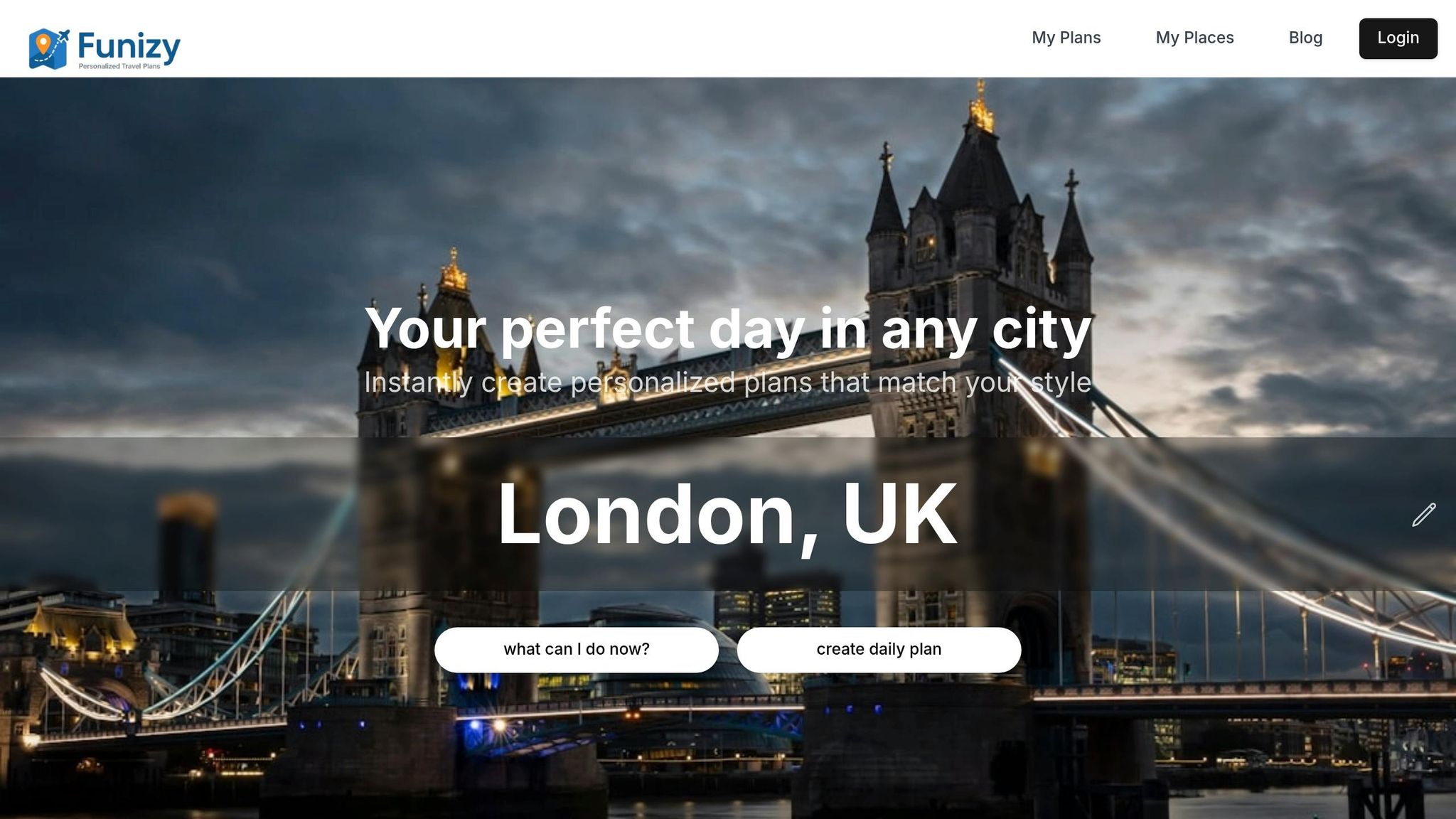
Turn your travel ideas into a well-organized plan with the help of AI-powered tools. Funizy takes the hassle out of planning by analyzing your preferences, budget, and travel dates to create a detailed itinerary in just minutes. Instead of juggling multiple resources, you’ll get a single document that pulls together your flight details, hotel reservations, restaurant bookings, and saved locations - all accessible offline.
Simplifying the Planning Process
Funizy makes trip planning easier by grouping nearby attractions and dining spots, so you won’t waste time backtracking or dealing with long transit times. Plus, its smart algorithms factor in weather conditions and crowd levels to help you plan activities at the best times. Start by selecting your destination on an interactive map, then customize your trip with options like walking tours, dining, shopping, or sightseeing.
Tailored to Your Travel Style
Whether you prefer a packed itinerary or a relaxed pace, Funizy adjusts to your travel style. It considers your energy levels and pacing preferences while also offering budget-friendly options so you can focus on what’s most important to you. The collaborative features make sharing plans with your travel companions simple, ensuring everyone is on the same page. This flexibility, paired with clear pricing, makes planning easy and stress-free.
Affordable and Practical
Funizy offers straightforward pricing: 10 tokens for $5 (ideal for a short getaway), 50 tokens for $10 (great for frequent travelers), or 100 tokens for $15 (perfect for travel enthusiasts). With a one-time payment for lifetime access - no subscriptions or hidden fees - you’ll spend less time sorting through emails and more time enjoying your trip.
9. Build in Flexibility and Buffer Time
Even the most carefully planned trips can run into unexpected hiccups - like delayed flights, meals that take longer than expected, or an unplanned event that disrupts your schedule. Adding buffer time to your itinerary ensures that one small setback doesn’t throw off your entire day. Plus, it gives you the freedom to enjoy unexpected discoveries or simply take a breather. Travel experts suggest planning only 60–70% of your available time, leaving the remaining 30–40% open for spontaneity or recovery time. This strategy ties directly to creating a more relaxed and enjoyable travel experience, as discussed earlier. Let’s explore how to work this buffer into your daily plans.
Practicality for Travelers
Think of buffer time as your travel safety net. Add an extra 10 minutes to each transit time to account for things like navigating subway stations or waiting for connections. Similarly, set aside 1–2 hours of unstructured time each day to absorb delays from long security lines, leisurely meals, or unexpected detours to local attractions. On travel days with flights or long drives, keep your schedule light. You don’t want to miss a timed museum entry because your train arrived late.
Flexibility for Different Travel Styles
Flexibility isn’t one-size-fits-all - it can be tailored to match your travel style. Whether you’re an adventure-seeker who thrives on packed schedules or someone who prefers a slower pace, a little flexibility goes a long way. Alternate between "structured days" packed with activities like theme parks or major museums and "floating days" left completely open for rest or impromptu plans. This approach helps you avoid burnout and gives you permission to skip an activity if you’re feeling drained. Build flexibility into each day, not just across your trip, to keep things manageable.
Ease of Implementation
Start by identifying your top three "must-do" activities and schedule those early in your trip. This front-loading strategy gives you extra room to adjust if something doesn’t go as planned. Organize your itinerary so attractions are grouped by location, making it easier to rearrange plans if delays arise. Use a digital itinerary to tweak your schedule on the go, and keep a short "Plan B" list of indoor activities like cafes or museums for each destination. That way, you’ll always have a backup if rain or other issues disrupt outdoor plans.
Enhancing Trip Enjoyment
Ironically, planning less can actually make your trip more enjoyable. When you’re not rushing from one activity to the next, you leave room for those magical, unplanned moments - a charming street performer, a hidden cafe, or an engaging conversation with a local. These unexpected experiences often become the highlights of any trip. Travel writer Jeff Lowe captures this perfectly:
"A good rule of thumb: plan for 60–70% of your time and leave the rest open. It's amazing how much stress disappears when you don't feel pressured to 'see it all'".
10. Use Digital Tools for Organization
When it comes to refining your travel plans, digital tools can simplify the entire process. These tools bring all your flight details, hotel reservations, and other bookings into one easily accessible place. In fact, using digital tools can save you 10–20 hours of planning while improving your itinerary's efficiency by 40%. That’s extra time to enjoy your trip instead of digging through your inbox for confirmations.
Practicality for Travelers
Digital organization tools go hand in hand with effective scheduling and buffer strategies. Apps like TripIt automatically pull booking details from your emails, while platforms like Wanderlog provide interactive maps to group nearby attractions efficiently. This feature helps you avoid wasting time zigzagging across a city, a common travel mistake. Many tools also offer offline access, a feature that traveler Marco Chen found indispensable:
"Offline access was a lifesaver in Europe! Had my whole itinerary and maps even without internet".
By combining these tools with earlier planning strategies, you can create an itinerary that stays organized yet flexible.
Flexibility for Different Travel Styles
Digital tools also adapt to various travel preferences. If you’re a meticulous planner, platforms allow for detailed customization of every aspect of your trip. Prefer a more relaxed approach? Simpler tools provide a basic structure while leaving room for spontaneity. AI-powered platforms like Tripandoo, Wanderjoy, and ItiMaker take it a step further by analyzing data like weather, reviews, and geography to generate tailored day-by-day plans in minutes. These tools can adjust to your specific needs, including travel pace, budget, dietary restrictions, or accessibility requirements. Best of all, they let you tweak your itinerary on the go - perfect for last-minute weather changes or shifts in energy levels.
Ease of Implementation
Before committing to a tool, test its mobile interface to ensure it’s user-friendly and offers offline access - crucial for areas with unreliable Wi-Fi. Many tools even account for buffer time to handle delays automatically. Most offer free versions, so you can try them out without spending a dime before deciding if premium features are worth the investment.
Enhancing Trip Enjoyment
Digital tools reduce stress and let you focus on enjoying your trip. Instead of scrambling to find a confirmation number at the airport or recalling which restaurant you bookmarked weeks ago, everything you need is right at your fingertips. Traveler Alex M. summed it up perfectly:
"I used to plan trips using notes and dozens of tabs... Now everything comes together in a clear, day-by-day itinerary that's easy to follow".
Interactive maps also help you discover activity clusters, making your days more efficient and leading to delightful surprises in areas you might not have explored otherwise.
11. Plan for Safety, Health, and Sustainability
A well-thought-out itinerary isn’t just about maximizing fun - it’s also about staying safe, healthy, and mindful of the environment. By weaving these elements into your travel plans, you can enjoy a smoother, more enriching experience. Start by checking official Travel Advisories to understand any risks or entry requirements for your destination. Enroll in the Smart Traveler Enrollment Program (STEP) to receive security updates and ensure the U.S. embassy can assist you during emergencies. Don’t forget to schedule a healthcare visit about a month before your trip to get any required vaccines or medications. Keep copies of your passport, itinerary, and credit cards with someone you trust at home, and always carry emergency contacts with you.
Practical Tips for Travelers
Small steps can make a big difference when it comes to safety. For instance, road accidents are a serious concern, with more than 200 U.S. citizens losing their lives each year in such incidents abroad. If you’re staying in a hotel, aim for a room between the 3rd and 6th floors - high enough to deter intruders but still reachable by emergency responders. When using public transportation, carry your backpack on your front and use a cross-body bag to reduce the risk of theft. Before you even land, make sure you know the local emergency number (like "911" in the U.S.), and keep digital backups of important documents in case of loss or theft.
Adapting to Your Travel Style
Your health and energy levels should guide your plans. If you’re someone who thrives on activity, you might enjoy packing in 20,000 steps a day. On the other hand, if you prefer a slower pace, consider easing into your trip with lighter activities for the first two days to recover from jet lag. To avoid burnout, limit yourself to one major museum or attraction per day. Also, plan for at least two hours for a proper meal each day - it’s not just about eating but also taking time to relax and recharge. For added convenience, pack snacks or grab a quick lunch from a grocery store when needed.
Making Sustainability Easy
Sustainability can blend seamlessly into your travel plans. Map out attractions in clusters to minimize transit time and reduce your carbon footprint by avoiding unnecessary backtracking. Look into public transportation, walking routes, or bike-friendly options ahead of time - metros and trains are often faster and more eco-friendly than rental cars. Packing reusable water bottles and snack bags is another simple way to cut down on waste. In bike-friendly cities like Copenhagen, cycling is not only practical but also a great way to explore while staying eco-conscious.
Enhancing Your Experience
By planning for safety, health, and sustainability, you can reduce stress and enjoy your trip more fully. Anticipating potential issues helps your itinerary flow smoothly, while supporting local businesses - whether by reading resident-written blogs or visiting authentic markets - adds depth to your travels. Taking things at a slower pace, with time for walking between destinations, allows you to soak in the surroundings instead of rushing. As Penn State Global emphasizes:
"Safety really begins with awareness – awareness of your surroundings, but also awareness of yourself and your behavior in a public place".
12. Book Key Items in Advance
Once you've outlined your itinerary, locking in key reservations early can make your trip much smoother. By securing essential elements ahead of time, you can avoid last-minute stress and ensure your plans stay on track. Start with the "route spine" - the core logistics like flights, train tickets, and crucial ferry crossings. These foundational bookings help shape the rest of your travel plans.
Prioritize What to Book Early
While not everything needs to be reserved in advance, some attractions and accommodations can sell out quickly or become more expensive closer to your travel dates. For example, major timed-entry attractions like the Uffizi Gallery, Vatican Museums, Anne Frank House, and Sagrada Familia often require reservations weeks ahead. A timed-entry ticket for the Uffizi costs $12, but waiting to purchase at the door - if tickets are even available - could cost you $20. Similarly, popular U.S. national parks like Yellowstone or the Grand Canyon often require timed-entry reservations through Recreation.gov, and accommodations inside the parks may need to be booked as much as a year in advance.
Tailor Your Approach to Your Travel Style
Your booking strategy should align with how you like to travel. For instance, small-group activities with limited capacity - like whale watching tours, sunset cruises on small boats, or guided hikes - are best reserved early. Families staying near national parks or in beach towns with limited lodging options should also book accommodations in advance to avoid inconvenient alternatives. Solo travelers may lean toward hotels for their convenience, such as easier check-ins and luggage storage. On the other hand, families might save money by reserving vacation rentals early, especially if they want access to a kitchen. If your travel dates aren’t set in stone, consider flexible fare options. For example, Amtrak’s "Flex" fares allow refunds before departure, offering more wiggle room compared to the more restrictive "Value" or "Sale" fares.
Balance Planning with Flexibility
Strategic booking doesn’t have to stifle spontaneity - it can actually enhance it. For instance, you might reserve a special restaurant for a celebratory dinner while keeping the rest of your meal plans open. If you're traveling in Europe, booking high-speed trains like TGV, AVE, or Frecciarossa two to three months in advance guarantees better prices and seat availability. Travel expert Hoku offers this advice:
"If something requires reservations - a specific restaurant, a popular tour, timed-entry tickets to a museum - lock those in early and build the rest of your day around them".
13. Build a Day-by-Day Schedule
Practicality for Travelers
Once you've outlined your itinerary, breaking it down day by day helps ensure everything runs smoothly. To make the most of your time, divide each day into logical segments: mornings for activities that require energy or great lighting (perfect for photography), afternoons for key attractions, and evenings for enjoying local food and nightlife. Group nearby spots together to cut down on travel time. For instance, you could dedicate a full day to exploring the National Mall in Washington, D.C., covering its museums and landmarks in one go. Don’t forget to add a 25–50% buffer for unexpected delays like transit hiccups or getting lost. This kind of structured planning creates a solid foundation for a well-balanced day.
Flexibility for Different Travel Styles
Rigid schedules can drain the fun out of a trip, so try using the 70% Rule: plan about 70% of your day and leave the rest open for impromptu adventures. Limit yourself to two or three planned activities per day, allow around two hours for sit-down meals, and stick to one museum per day to avoid burnout. This balance between structure and spontaneity not only keeps you energized but also leaves room for unexpected discoveries that can make your trip truly special.
Enhancing Trip Enjoyment
Tackle your must-see attractions early in the trip. That way, if bad weather or closures disrupt your plans, you’ll still have time to adjust. For international travel, keep the first 48 hours light to recover from jet lag. Interestingly, nearly 80% of travelers say having a detailed plan makes their trips more enjoyable. However, the best itineraries act as flexible guides, helping you focus on creating memories rather than stressing over every logistical detail.
14. Review and Adjust Your Itinerary
Practicality for Travelers
Before finalizing your travel plans, take a close look at your itinerary to ensure it makes sense geographically. Planning your activities in a logical sequence can help you avoid wasting time on unnecessary backtracking. Double-check the operating hours of attractions - many museums, for instance, close on specific weekdays. Review booking details carefully, including cancellation policies, fees, and refund terms. To avoid stress, add a buffer of 25–50% to your estimated transit times to account for potential delays or detours.
Flexibility for Different Travel Styles
Once logistics are squared away, tailor your itinerary to fit your travel style. A good rule of thumb is the 70% Rule: plan for about 70% of your day and leave the remaining 30% open for unplanned adventures. It’s also smart to have a backup list of alternative activities, particularly indoor options, in case of unexpected weather or changes. For shorter trips, like a three-day getaway, focus on exploring one city and prioritize your must-see attractions early in the trip. This way, you’ll have extra time to adapt as needed.
"The best travel itinerary isn't the most detailed one - it's the one that lets you spend your energy on experiences, not logistics." - Hoku
Ease of Implementation
A well-thought-out plan makes on-the-go adjustments much easier. While creating a solid itinerary might take 3–5 hours, it can save you over 10 hours during your trip. Use the "5 W's" - Who, What, When, Where, Why - to ensure every activity aligns with your travel goals. To stay prepared, download offline maps and keep digital copies of your booking confirmations so you can access them without internet. It’s also a good idea to set aside 10–20% of your total travel budget as an emergency fund for unexpected expenses.
Enhancing Trip Enjoyment
Fine-tuning your itinerary to accommodate real-life conditions can transform a rigid checklist into an enjoyable adventure. Schedule major attractions strategically to avoid exhaustion, and don’t forget to plan meal breaks to keep everyone energized. To make room for spontaneous experiences, consider adding a 15–20% buffer to your daily spending for things like unplanned purchases or dining out. Keep in mind that no itinerary is set in stone - local customs, like afternoon siestas or impromptu street festivals, might require you to adjust on the fly. By refining your plans now, you’ll be setting yourself up for a more flexible, stress-free trip that embraces the unexpected.
15. Stay Ready for Changes During Your Trip
Practical Tips for Travelers
Even the most carefully planned trip can hit a few bumps - delays, sudden weather changes, or unexpected closures. The trick is to build flexibility into your plans instead of trying to control every detail. Keep critical details, like confirmation numbers, hotel addresses, emergency contacts, and passport photos, stored somewhere you can access offline. Download offline maps, so you're never stranded without navigation. And don't underestimate the value of travel insurance - it can save you from significant financial headaches when cancellations or emergencies pop up. These small steps can make it much easier to adapt when things don't go as planned.
Balancing Structure and Flexibility
Whether you're the type to plan every moment or prefer to go with the flow, a mix of structure and flexibility can work wonders. Plan about two-thirds of your day and leave the rest open for unexpected opportunities or delays. Focus on your top three "anchor activities" - the must-do experiences that define your trip. Everything else can be rearranged or skipped if needed. If you're traveling solo, you might enjoy taking local advice for last-minute plans. Families, on the other hand, should have backup ideas for indoor fun in case outdoor plans fall through.
Making Flexibility Work
Turning adaptability into action is easier than you think. Take five minutes each evening to review the next day's plans based on updated weather, local news, or even how you're feeling. Use apps like TripIt or Wanderlog to keep all your reservations in one place and get automatic updates on flight delays or gate changes. Group activities by location to avoid wasting time traveling across town if something is closed - you'll already have nearby alternatives. On travel days, keep your schedule light. Transportation delays are common, so avoid planning major activities when you're moving between cities.
Finding Joy in the Unexpected
The best travelers know that setbacks are just part of the adventure. Include 1–2 hours of unstructured time each day and set aside 15–20% of your daily budget for spontaneous experiences. If someone invites you to a new activity, think carefully before saying yes - over-scheduling can drain the fun out of your trip. By staying flexible, you'll turn surprises into highlights instead of hassles, making your journey all the more memorable.
Conclusion
A well-thought-out itinerary strikes the perfect balance between structure and spontaneity. It gives you enough direction to sidestep logistical headaches while leaving space for those unexpected moments that make traveling unforgettable.
Spending a few hours planning ahead can save you countless hours during your trip. Aim to schedule about 70% of your day, leaving the remaining 30% open for unplanned adventures that might just become the highlight of your journey.
Platforms like Funizy can simplify this process by offering affordable, tailored itineraries. They consider factors like weather and crowd levels to recommend the best times for activities, ensuring you don’t show up at attractions on their closed days.
To ensure a smooth trip, try grouping activities by location, adding a 25–50% buffer to your transit estimates, and prioritizing must-see experiences early in the trip when your energy is at its peak. Also, consider including at least one completely unplanned half-day each week and keeping some extra funds handy for those spur-of-the-moment opportunities.
Remember, your itinerary is a guide, not a strict schedule. As Sandy from Observing Leslie wisely puts it:
"The best-laid plans can go awry, but if you're flexible, that can turn out to be even better than what you'd planned!"
FAQs
How do I pick my top “must-do” activities?
To plan your "must-do" activities, focus on experiences that stand out, create lasting memories, and match your travel preferences. This could include visiting famous landmarks, diving into local traditions, or trying thrilling adventures. Look into well-reviewed destinations and prioritize what excites you the most. Be mindful of practical details like travel time and breaks to avoid cramming too much into your itinerary. Striking a balance between your interests and realistic planning will help make your trip both enjoyable and stress-free.
How much buffer time should I add each day?
To maintain a comfortable pace, consider adding 2–3 hours of buffer time to your daily schedule. This extra time helps accommodate travel, breaks, or any unexpected delays that might come up. A helpful guideline is the 3:1 ratio - for every hour of planned activity, allocate three hours overall. This approach gives you the flexibility to handle the day without feeling rushed, making your trip more enjoyable.
What should I book in advance vs. leave flexible?
Booking your flights well ahead of time can save you money - aim for about 49 days in advance for domestic trips and 81 days for international travel. This timing often helps you snag better deals. Similarly, if you're planning to visit popular attractions, take tours, or stay in accommodations with limited availability, reserving early is a smart move.
For activities like trying local restaurants, enjoying leisurely outings, or exploring spontaneously, it's best to keep your plans open. This flexibility allows you to adapt and make the most of unexpected opportunities during your trip. By mixing early planning for essentials with room for impromptu adventures, you can strike the perfect travel balance.