

Spontaneous vs Planned Travel: Which Suits You?
Your travel personality decides if planning or spontaneity works—mix both to get structure without losing adventure.
By Martin Zokov
• 11 min read
When planning a trip, the choice between spontaneous and planned travel depends on your personality and preferences.
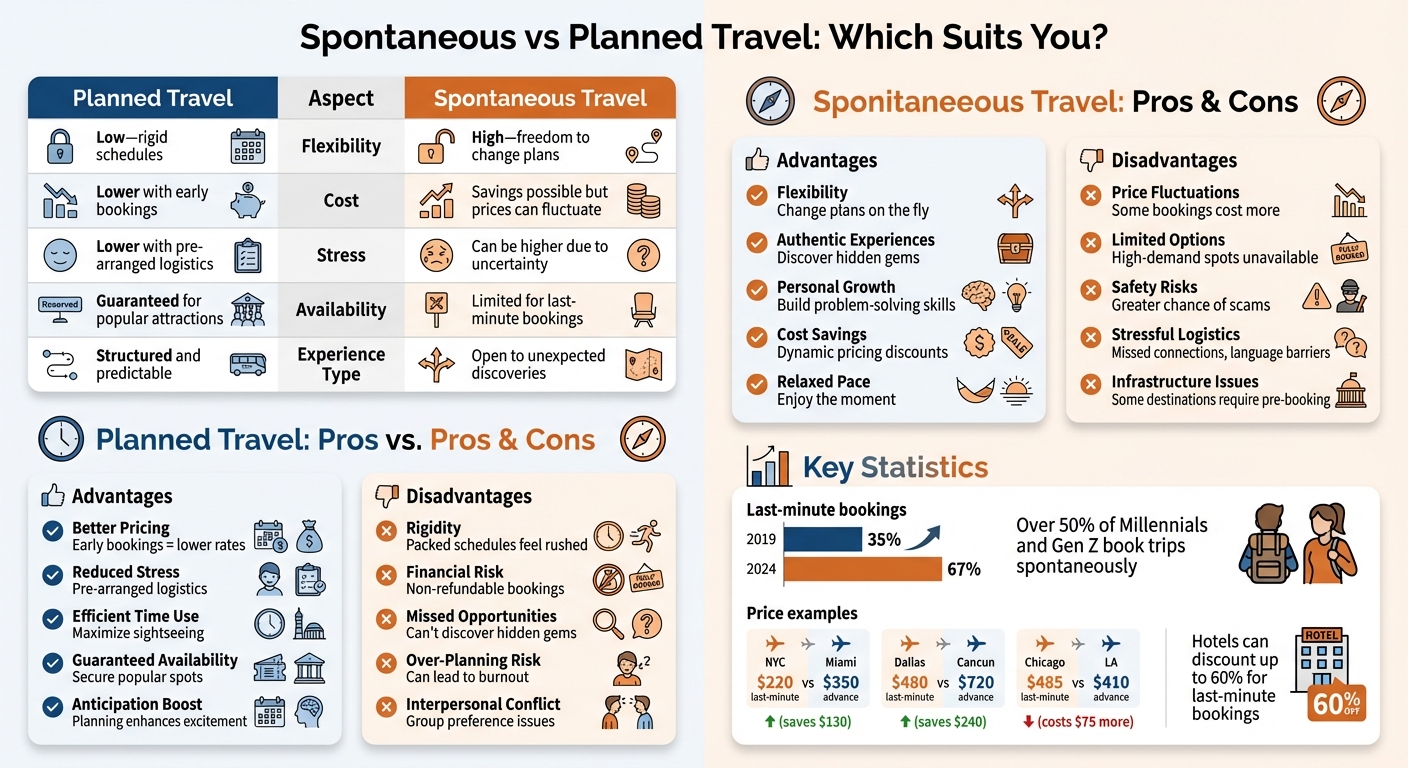
- Planned travel offers structure, reduced stress, and cost savings through early bookings. It’s ideal for those who value predictability and want to maximize their time. However, it can feel rigid and leave little room for unexpected opportunities.
- Spontaneous travel provides freedom and flexibility, allowing you to adjust plans on the go. It’s perfect for those who enjoy surprises and last-minute decisions. However, it carries risks like price fluctuations, limited availability, and logistical challenges.
Many travelers find a mix of both approaches works best, combining must-do activities with unstructured time for exploration. Tools like Funizy can help you strike that balance by offering flexible plans tailored to your style.
Quick Comparison:
| Aspect | Planned Travel | Spontaneous Travel |
|---|---|---|
| Flexibility | Low - rigid schedules | High - freedom to change plans |
| Cost | Lower with early bookings | Savings possible but prices can fluctuate |
| Stress | Lower with pre-arranged logistics | Can be higher due to uncertainty |
| Availability | Guaranteed for popular attractions | Limited for last-minute bookings |
| Experience Type | Structured and predictable | Open to unexpected discoveries |
Your style depends on whether you prefer control or the thrill of the unknown. Both approaches have their strengths, and combining them can offer the best of both worlds.
Planned vs Spontaneous Travel: Complete Comparison Guide
Planned Travel: Benefits and Drawbacks
Benefits of Planned Travel
Planning a trip ahead of time can make the experience smoother and more cost-effective. Booking flights and accommodations early often means snagging better deals, while also ensuring access to popular attractions during busy seasons.
Interestingly, the act of planning itself can be a source of happiness. Studies suggest that looking forward to a vacation can bring more joy than material purchases. Matthew Killingsworth of the Wharton School explains:
"As humans, we spend a lot of our mental lives living in the future... Our future-mindedness can be a source of joy if we know good things are coming, and travel is an especially good thing to have to look forward to".
In fact, a 2002 study from the University of Surrey found that people are often happiest when they have a vacation lined up.
Another perk of planned travel is its efficiency. With a structured itinerary, you avoid wasting precious vacation time on logistics like finding accommodations or figuring out transportation. This is especially helpful for short trips or complex itineraries, allowing you to focus on enjoying your destination and checking off key experiences.
Drawbacks of Planned Travel
While planning has its perks, it’s not without its downsides.
One major drawback is the rigidity it can impose. A tightly packed schedule leaves little room for flexibility, turning a relaxing vacation into a high-pressure checklist. This can make unexpected delays or changes more stressful and costly.
Over-planning can also lead to "museum fatigue", where cramming in too many activities leaves you too exhausted to enjoy them. This approach can strip away the sense of wonder that makes travel special.
Additionally, group travel can become challenging when plans are overly rigid. Different travel companions may have varying preferences for pace and activities, leading to potential conflicts.
Planned Travel: Pros and Cons Summary
Here’s a quick snapshot of the pros and cons of planned travel:
| Advantages | Disadvantages |
|---|---|
| Better Pricing: Early bookings often mean lower rates, leaving more budget for fun activities. | Rigidity: Packed schedules can feel rushed and limit spontaneity. |
| Reduced Stress: Pre-arranged logistics eliminate last-minute hassles. | Financial Risk: Non-refundable bookings can result in losses if plans change. |
| Efficient Time Use: Structured plans help maximize sightseeing and ensure must-see spots aren’t missed. | Missed Opportunities: Strict itineraries may prevent you from discovering hidden gems or taking local advice. |
| Guaranteed Availability: Advance reservations secure spots at popular attractions, especially during peak times. | Over-Planning Risk: Too much detail can lead to burnout and make the trip feel like work. |
| Anticipation Boost: Planning a trip can enhance excitement and extend the joy of travel. | Interpersonal Conflict: Differing preferences among travel companions can create tension. |
sbb-itb-27c3d16
Spontaneous Travel: Benefits and Drawbacks
Benefits of Spontaneous Travel
Spontaneous travel offers a sense of freedom that’s hard to match. It allows you to extend your stay in a destination you love or leave quickly if it’s not what you expected. This flexibility means you can adjust your plans based on the weather, unexpected discoveries, or recommendations from locals. For example, you might decide to explore a museum on a rainy day instead of sticking to an outdoor itinerary.
The trend toward spontaneous travel has grown significantly. In fact, last-minute bookings jumped from 35% of leisure trips in 2019 to 67% in 2024. Millennials and Gen Z travelers are leading the charge, with over half of them now booking trips on a whim. This shift highlights a departure from rigid, pre-planned travel styles. As travel psychologist Alex notes:
"Risk isn't recklessness. It's the birthplace of stories".
Without a strict schedule, you’re more likely to stumble upon hidden gems and enjoy authentic experiences through local tips and personal interactions. Digital nomad Jamie sums it up perfectly:
"Sometimes, the best plan is no plan at all".
This unstructured approach fosters a relaxed vibe, letting you soak in the moment without worrying about sticking to a checklist.
Interestingly, spontaneous travel can also save you money. Airlines and hotels often drop prices to fill unsold spots, sometimes by as much as 60%. For instance, a last-minute flight from New York to Miami booked 24–72 hours ahead cost $220, compared to $350 when booked three months earlier - a $130 difference. Similarly, a Dallas-to-Cancun flight dropped from $720 to $480, saving $240.
But while the benefits are clear, it’s essential to weigh the risks.
Drawbacks of Spontaneous Travel
Spontaneous travel isn’t without its challenges. Price volatility is a major concern. While some last-minute bookings offer steep discounts, others can spike unexpectedly. For example, a spontaneous flight from Chicago to Los Angeles cost $485, compared to $410 when booked in advance - an increase of $75. High-demand routes and peak travel seasons can make last-minute trips significantly pricier.
Another issue is limited availability. Popular attractions, tours, and accommodations often require advance reservations. Without pre-planning, you might miss out on key experiences or struggle to find lodging, especially in areas with limited infrastructure.
Safety can also be a concern. Without thorough research, you may fall victim to scams, such as overpriced taxi fares or fraudulent vendors. First-time solo traveler Priya shared her experience:
"I never thought I could pull off a trip on a whim - until I did".
Her success story underscores the need for vigilance and verifying information from trustworthy sources.
The psychological impact of spontaneous travel varies. People who thrive on unpredictability often enjoy the excitement, but those who prefer structure may find the lack of planning stressful. Additionally, logistical hiccups like expired passports or missing visas can completely derail last-minute trips.
Spontaneous Travel: Pros and Cons Summary
| Advantages | Disadvantages |
|---|---|
| Flexibility: Change plans on the fly based on preferences, weather, or discoveries. | Price Fluctuations: Some last-minute bookings may cost more than planned trips. |
| Authentic Experiences: Discover hidden gems and connect with locals. | Limited Options: High-demand activities and accommodations may be unavailable. |
| Personal Growth: Develop resilience and problem-solving skills in real-time. | Safety Risks: Greater chance of encountering scams or unreliable information. |
| Cost Savings: Dynamic pricing can lead to significant discounts. | Stressful Logistics: Issues like missed connections or language barriers can add pressure. |
| Relaxed Pace: Enjoy the moment without being tied to a rigid schedule. | Infrastructure Issues: Some destinations require pre-booking for smooth travel. |
Planned vs Spontaneous Travel – Which Is Better?
How Funizy Supports Flexible Planning
Whether you prefer a go-with-the-flow approach or a detailed itinerary, finding the sweet spot between structure and flexibility can make your trip more enjoyable. Funizy helps travelers strike that balance by offering personalized city itineraries that provide a solid framework while leaving room for on-the-go adjustments. With plans starting at just $5 for 10 tokens on a one-time payment basis, it’s an accessible option for travelers of all kinds. Let’s dive into how Funizy personalizes your city adventures.
Custom Itineraries for City Destinations
Funizy crafts daily plans tailored to your preferences, whether you’re into sightseeing, food, shopping, or discovering hidden gems. All you have to do is share your interests and how you’d like to spend your time, and the platform generates a plan that fits your style. As Dan from DanRecommends explains:
"You tell it what you like and how you want to spend your time, and you get a plan that matches. It's a great starting point. You can then iterate, delete what you don't want, add more of what you do."
The platform specializes in designing the "perfect day" for major cities, uncovering unique activities and lesser-known spots along the way. This saves you hours of research while offering a high-quality template to build on. Dan further highlights:
"One of the best parts is it helps you find activities you would otherwise miss... It gives you a fresh look at your travel plan."
Plus, the token system is flexible, scaling to match your travel needs.
Interactive Tools for Real-Time Adjustments
Funizy’s tools cater to travelers who crave both structure and spontaneity. You can tweak your itinerary on the fly - removing activities you’re not interested in, adding new ones you discover, and making instant adjustments. This approach, often called "structured spontaneity", blends the clarity of a plan with the freedom to adapt as you go. Dan from DanRecommends sums it up well:
"It fits people who don't love planning every detail or who travel a lot and don't have time to research everything."
With its balance of organization and flexibility, Funizy has earned a strong recommendation from DanRecommends, making it a great choice for travelers looking to make the most of their city adventures.
Finding Your Travel Style
Your travel style is a reflection of your personality. Research suggests that personality traits often influence travel preferences. For example, people who score high in conscientiousness tend to favor structure and predictability, while those with a high degree of openness to experience often gravitate toward curiosity-fueled adventures and spur-of-the-moment plans. This idea ties back to the earlier discussion about the pros and cons of both planned and spontaneous travel. Recognizing these tendencies can help you design trips that feel fulfilling and energizing.
Combining Planning with Spontaneity
With this understanding, many travelers find value in blending structured plans with moments of flexibility. Travel psychologist Palmy Rosy offers a helpful analogy:
"Plan enough to feel grounded but leave room for magic - like jazz, you practice the chords but improvise."
This approach could mean securing reservations for must-do experiences - like a hot air balloon ride over Cappadocia - while leaving afternoons or evenings free for unplanned exploration. A practical method to achieve this balance is the "1-2 Event Limit" rule: schedule one or two key activities each day, then allow the rest of the day to unfold naturally. You might also consider leaving entire days unscheduled as buffer time, giving yourself the freedom to stumble upon hidden gems or simply relax. Tools like Funizy can help you strike this balance by offering a framework that’s adaptable, providing structure without stifling spontaneity. Finding this middle ground can make your travels both grounded and adventurous.
Questions to Determine Your Travel Style
To figure out what travel style suits you, ask yourself a few key questions. Do you thrive with a detailed itinerary, or does that feel restrictive? When faced with unexpected hiccups - like a closed restaurant or a delayed train - do you see it as a disaster or a chance for a new adventure? Are you someone who prioritizes checking off major landmarks quickly, or do you prefer savoring meaningful, unplanned interactions? Also, consider whether diving deep into research about a destination excites you or if it diminishes the thrill of discovery. Your answers will help you identify whether you lean toward a planned, spontaneous, or hybrid travel approach. There’s no right or wrong - just what feels most aligned with your personality, budget, and the destination you’re visiting.
Conclusion
Your travel personality plays a big role in finding the right balance between planning and spontaneity. There’s no one-size-fits-all approach - it’s all about what feels right for you. If you’re someone who enjoys structure and predictability, planning ahead can help you feel more at ease and make the most of your trip. On the other hand, if you thrive on the thrill of the unknown, spontaneous travel lets you uncover hidden gems and create unforgettable moments.
The good news? You don’t have to pick one over the other. Many travelers swear by a mix of both - a method often called the "Anchor and Drift" approach. This involves planning 2–3 must-do activities each day while leaving plenty of room for unplanned adventures. It’s a great way to enjoy structure without losing the excitement of spontaneity.
Funizy offers tools to help you strike this balance effortlessly. With its flexible framework, you can plan key activities while still leaving space for spur-of-the-moment discoveries. This approach is especially helpful for group trips, giving planners the structure they need while allowing explorers the freedom they crave.
Ultimately, the best travel style is the one that matches your personality, budget, and destination. Ask yourself: do schedules make you feel secure or stifled? Does unpredictability excite you or stress you out? Your answers will help you design trips that energize and inspire you. Thanks to modern technology, spontaneous travel is easier and safer than ever, while planning tools make structured trips more adaptable. The trick is finding the balance that works for you.
FAQs
How do I know if I’m more of a planner or a spontaneous traveler?
Your approach to travel often mirrors your personality and preferences. If you love mapping out every detail - like booking transportation, securing accommodations, and sticking to a set itinerary - you probably fall into the "planner" category. On the other hand, if you enjoy going with the flow, making decisions on the fly, and embracing the unexpected, you're likely more spontaneous. Think about how much structure you need versus how comfortable you are with uncertainty to figure out which style fits you best.
What should I book in advance even on a spontaneous trip?
Even if you’re heading out on a last-minute adventure, it’s smart to arrange travel insurance and secure your accommodations ahead of time. This not only provides peace of mind but also ensures you have a safe place to stay - especially during peak travel times or in high-demand destinations.
How can I mix planning and spontaneity without overscheduling?
When planning a trip, it's smart to strike a balance between organization and flexibility. Book the essentials - like accommodations, transportation, and must-see attractions - so you have a solid foundation. At the same time, leave room in your schedule for unplanned adventures. For example, you might plan a few key activities but keep certain afternoons open to wander or discover something unexpected. This mix of structure and spontaneity allows you to adapt on the go, blending security with the thrill of exploration.