

Can't Decide What to Do on Holiday? Try This
Plan a stress-free holiday in five clear steps: set goals, prioritize activities, build an itinerary, map routes, and add time buffers.
By Martin Zokov
• 12 min read
Planning a holiday can feel overwhelming when you're faced with too many options. Here's a quick solution: focus on what matters to you, organize your ideas, and create a simple, flexible plan. This guide breaks it down into five steps to help you plan a trip that suits your style without stress:
- Set Your Goals: Identify your travel priorities, interests, and budget. Think about what you want most from your trip.
- Organize Activities: Group activities by type (e.g., food, adventure, relaxation) and location to save time.
- Prioritize: Choose must-do activities and balance them with downtime. Use the "70% rule" - plan 70% of your day and leave 30% open for spontaneity.
- Use Tools Like Funizy: Simplify planning with tools that create custom itineraries based on your preferences. Funizy is a great option for creating efficient daily schedules.
- Review and Finalize: Add time buffers, confirm reservations, and prepare backup options for unexpected changes.
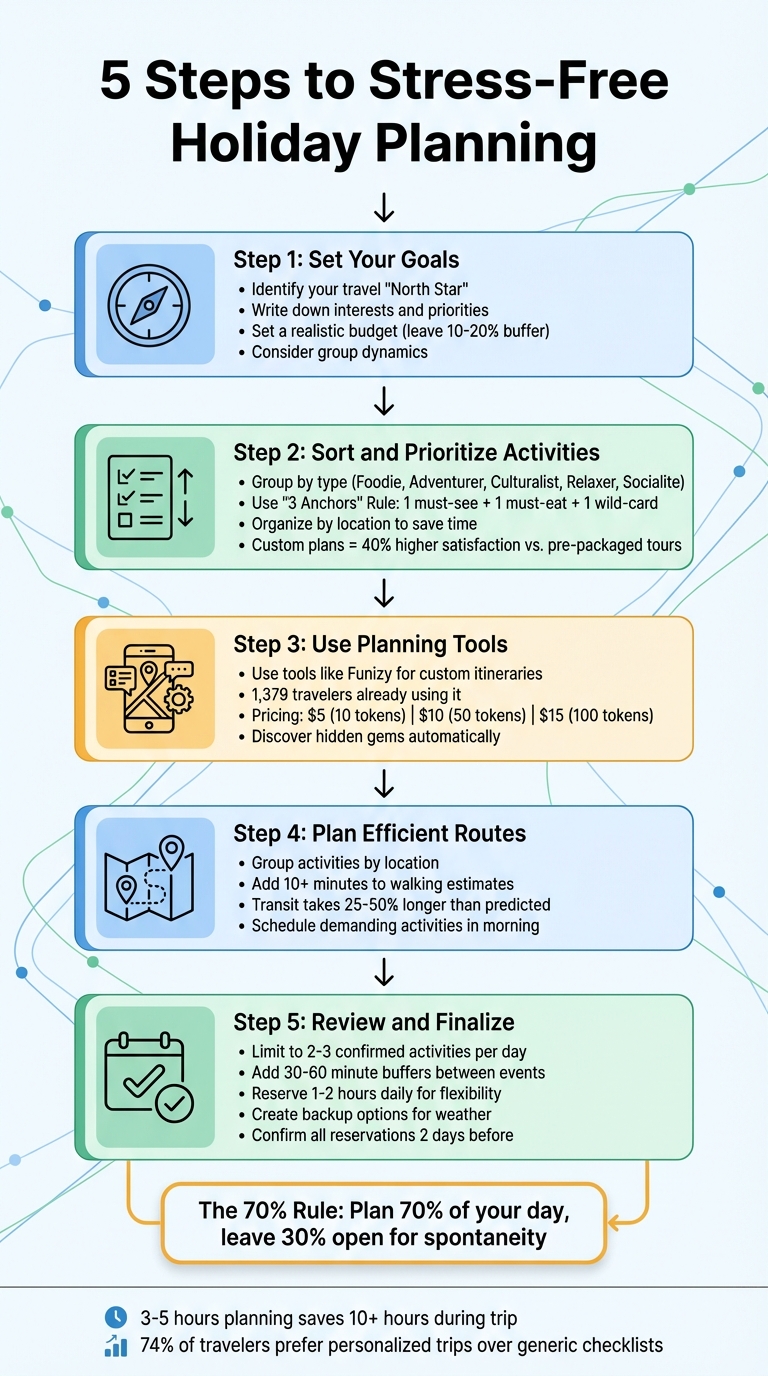
5-Step Holiday Planning Process Guide
How to Make a Travel Itinerary: Easy Hacks You Need!
Step 1: Identify Your Travel Preferences and Goals
Before diving into the details of your trip, take a moment to clarify what you want to get out of it. Think of your travel "North Star" - a guiding principle that reflects your main goal. Are you hunting for hidden gems that offer unforgettable meals, or is your heart set on exploring ancient ruins and museums? Knowing this will help you focus on activities that align with your vision. From there, outline your interests and set a budget that feels realistic for your plans.
Write Down Your Interests and Priorities
Start by jotting down what excites you. Do you love the energy of a bustling market, or do you prefer the calm of a quiet café? This will help you uncover your travel style. Maybe you're an Adventurer craving outdoor challenges, a Foodie eager to try new flavors, or someone who just wants to unwind. Write down your must-do activities alongside secondary interests to keep your itinerary focused.
Think about how much you can realistically pack into each day. Are you up for a packed schedule with 3–4 activities, or do you prefer a more relaxed pace with just one? Also, consider how much time you'll actually have. For example, if you arrive late Friday and leave early Monday, you might only have two full days. Aim to plan for about 70% of your available time, leaving room for unexpected discoveries or downtime.
Set a Budget That Works
Figure out your spending comfort zone by subtracting any pre-paid expenses from your total budget. What’s left is your available cash for the trip. Divide this into categories like transportation, lodging, daily spending (meals, coffee, etc.), activities (tours, museum tickets), and a small buffer for surprises.
"A travel budget is not about cutting fun or tracking every dollar. It is about knowing what you can spend so you can enjoy the trip without constantly doing mental math or stressing mid-vacation." - Budgetsandtravel.com
Always leave room for the unexpected - about 10–20% of your budget - for things like baggage fees, tourist taxes, or sudden weather changes. Research local prices in advance to avoid sticker shock. If food is a big priority, allocate more to dining while cutting back in other areas, like accommodations. Let your "North Star" guide these decisions.
Pick a Starting Point and Consider Your Group
Once your budget is set, think about how your starting point fits with your group dynamics. If you're traveling with others, ask everyone to share their "must-see" spots. Quick polls can help streamline decisions.
Group activities by location to save time and energy, and be mindful of everyone’s needs - dietary restrictions, health issues, or different energy levels. For more flexibility, let smaller subgroups explore separately and meet up later to share stories. To avoid last-minute cancellations, consider asking for deposits upfront. Apps like Splitwise can also simplify shared expenses, keeping things fair and stress-free.
Step 2: Sort and Prioritize Your Activities
Now that you've nailed down your interests and budget, it’s time to streamline your options. Whether it’s restaurants, museums, hikes, or markets, organizing these choices will make planning easier. Start by grouping activities into categories based on the type of experience they offer. For example:
- The Foodie: Culinary adventures like cooking classes or food markets.
- The Adventurer: Thrilling activities such as hiking or surfing.
- The Culturalist: Museums, art galleries, or traditional performances.
- The Relaxer: Enjoying a beach day or indulging in long, leisurely meals.
- The Socialite: Nightlife, local festivals, or social gatherings.
This method helps you spot patterns in your preferences and ensures you cover a variety of experiences without missing anything important.
Organize Activities by Type
Once you've sorted activities into categories, refine your list by considering energy levels and time. For instance, balance high-energy outings - like intense hikes or museum tours - with more relaxed moments, such as a coffee break or a quiet stroll in the park. Grouping activities by location is another time-saver; visiting nearby spots in one outing avoids unnecessary backtracking.
A helpful strategy is the "3 Anchors" Rule. For each day, pick:
- One must-see activity: Something you absolutely don’t want to miss.
- One must-eat experience: A standout meal or food-related activity.
- One wild-card option: Something spontaneous or unexpected.
Also, keep a backup plan in mind for indoor activities in case of bad weather.
Rank Your Options
Now it’s time to prioritize. Start by identifying your non-negotiables - the experiences that align most closely with your main travel goals (your "North Star" from Step 1). These should form the backbone of your itinerary. For everything else, decide what’s a "nice-to-have" rather than a "must-do." For example, if your focus is on authentic cuisine, you might skip heavily marketed tourist spots, even if they’re popular.
Timing also plays a big role. Some activities are best enjoyed at specific times - museums are often less crowded and better lit in the morning, while evenings are great for relaxed dining or unplanned adventures. Consider your personal pace, too. Do you thrive on packed schedules with multiple stops, or do you prefer a slower day with just one major highlight?
Tailoring your itinerary to your own rhythm pays off. Research shows that custom plans result in 40% higher satisfaction compared to pre-packaged tours. So, take the time to create a plan that truly fits your style.
Step 3: Use Funizy to Build Your Itinerary
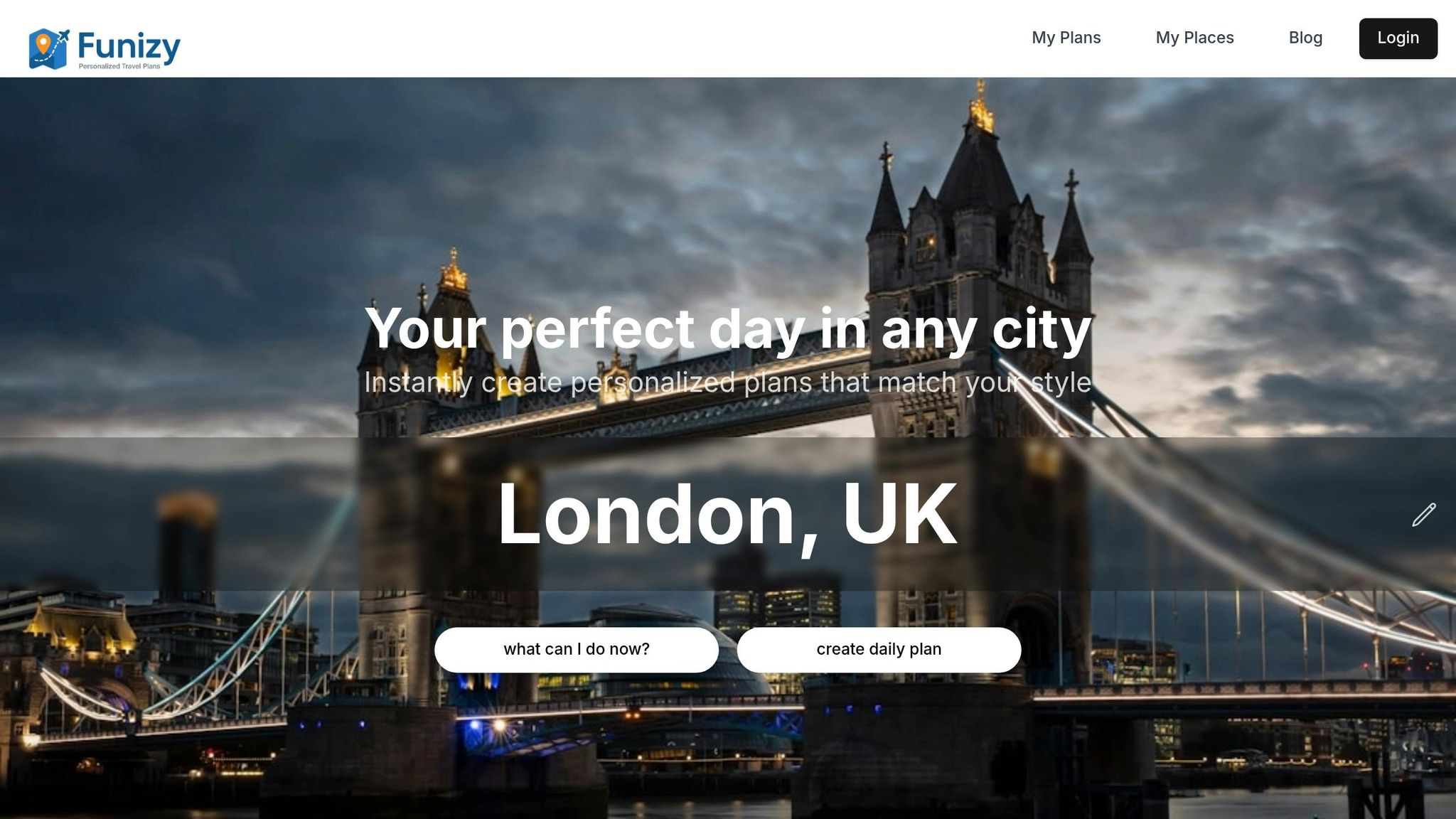
Once you've prioritized your activities, it's time to turn those ideas into a well-organized plan using Funizy. This tool simplifies the process of creating a daily travel itinerary based on your preferences. Instead of juggling blogs, maps, and reviews, Funizy lets you input your destination and interests, then does the heavy lifting for you.
What makes Funizy stand out? It highlights hidden gems and lesser-known spots that you might not find in traditional guides. Whether your travel style leans toward food adventures, thrill-seeking, or laid-back exploration, Funizy tailors your itinerary to fit. With 1,379 travelers already onboard, it's quickly becoming a go-to tool for personalized travel planning. The result? A smooth shift from planning to action, with a schedule that truly reflects your style.
How Funizy Works
Getting started is easy. Using your prioritized list of activities, Funizy generates a custom daily itinerary. Simply select your destination and fine-tune your preferences - whether you're into dining, sightseeing, shopping, or walking tours. Funizy then creates a "perfect day" plan based on your choices.
One of its standout features is the ability to tweak your plan. Don’t like an activity? Remove it. Want more of something? Add it. You can also use an interactive map to set your starting point, making it simple to plan around your hotel or a specific area. Funizy not only includes popular attractions but also uncovers hidden gems to make your trip extra special.
Currently, Funizy focuses on single-day itineraries, but multi-day planning is on the horizon. There's also a handy "what can I do now?" feature for real-time suggestions while you're out exploring. As Dan Recommends puts it:
"If you want a personalized travel plan without spending hours researching, Funizy is a solid pick".
Funizy Pricing Options
Funizy uses a token-based payment system, offering lifetime access to your plans with a one-time purchase. Here's the pricing breakdown:
| Token Package | Price | Best For |
|---|---|---|
| 10 Tokens | $5 | Short weekend trips |
| 50 Tokens | $10 | Regular travelers |
| 100 Tokens | $15 | Frequent adventurers |
For a quick getaway, the 10-token package at $5 is perfect. If you're someone who travels often, the 50- or 100-token packages provide even better value.
sbb-itb-27c3d16
Step 4: Plan Efficient Daily Routes
Once your itinerary is set, the next step is to make sure you’re spending your time wisely. Nobody wants to waste precious vacation hours running back and forth across a city. Smart route planning can turn a hectic day into a smooth and enjoyable adventure.
Group Activities by Location
One of the easiest ways to lose time on a trip is by zigzagging across town. To avoid this, plot your planned activities on a map and identify clusters of attractions that are close to each other. Organize your day so you’re focusing on one area at a time - spend a morning or afternoon exploring spots within walking distance.
Use the activity rankings you created earlier to decide what your "anchor" activities are for each day. These are the must-visit spots that will shape your schedule. For example, if a historic museum opens at 10:00 AM, plan to have lunch and explore nearby shops in the same area rather than wasting time commuting elsewhere.
Keep in mind that digital maps often underestimate travel time. Add at least 10 extra minutes to walking estimates to account for things like finding station entrances, waiting for transportation, or the occasional wrong turn. Transit times can also take 25–50% longer than what apps predict.
Account for Weather and Energy
Once your route is mapped, it’s time to fine-tune it based on the weather and how much energy you’ll have throughout the day. Check the extended forecast for your destination, and have alternative indoor plans ready in case bad weather disrupts outdoor activities. For instance, if rain is expected on your planned beach day, consider visiting a museum or art gallery instead.
Energy levels also play a big role in how much you can enjoy your day. Schedule more demanding activities - like visiting major landmarks, hiking, or navigating busy markets - for the morning when you’re feeling fresh and crowds are smaller. Save the afternoons for lighter activities such as leisurely walks or a relaxed meal. Evenings should remain flexible for unexpected discoveries or downtime. As Diana from Diana Travels wisely advises:
"Designing space into your itinerary is the secret to stress-free travel".
A good rule of thumb is the 70% rule: plan to fill only 70% of your day, leaving the remaining 30% (about 2–3 hours) for breaks, delays, or those spontaneous moments that often become the highlight of your trip. And after a busy day of sightseeing, balance it out with a slower-paced day to avoid burnout.
Step 5: Review and Finalize Your Plan
You've mapped out your itinerary and organized your routes - now it's time to give your plan a final once-over. This step helps you catch any potential issues and ensures your trip stays as smooth and enjoyable as possible.
Add Time Buffers and Balance Activities
Take a fresh look at your daily schedule. If you've crammed in more than 2–3 confirmed activities per day, you might be setting yourself up for unnecessary stress. Walk yourself through each day mentally and make sure the pace feels manageable. Build in 30–60 minutes of buffer time between scheduled events to avoid feeling rushed.
Set aside 1–2 hours daily as extra buffer time. This isn't wasted - it can absorb delays like a late train, a leisurely meal, or those unexpected moments that often end up being the highlights of your trip. Travel writer Jeff Lowe emphasizes the importance of flexibility:
"A good rule of thumb: plan for 60–70% of your time and leave the rest open. It's amazing how much stress disappears when you don't feel pressured to 'see it all.'"
- Jeff Lowe, Travel Writer, My Travel Source
Balance your schedule by mixing up activity types. For instance, follow a day of museum visits with something more relaxed, like strolling through a park or enjoying a quiet café. If your itinerary includes flights or long drives, keep those days simple - traveling itself can be more tiring than you'd expect. This step ties together everything you've planned so far into a realistic and enjoyable travel experience.
Create Backup Options and Confirm Reservations
Once your schedule feels balanced, focus on securing your reservations and preparing backup options. For every major activity, have an alternative plan handy - like an indoor activity for rainy days or a nearby option if your energy dips.
Double-check all bookings: Two days before you leave, reconfirm flight, transfer, and hotel details. Also, verify opening hours and closed days for key attractions. Many museums close on Mondays or Tuesdays, and some restaurants may shut down mid-week. Tess Arnold of Traveling Tessie shares her experience:
"I've been let down that the museums I wanted to visit were closed on the day that I walked by, and I've been disappointed and stranded without somewhere to eat dinner."
- Tess Arnold, Founder, Traveling Tessie
Finally, safeguard your travel details by saving offline copies of confirmations, maps, and important documents. Keep both digital and printed versions, as Wi-Fi might not be available when you need it most. For critical documents like your passport and visa, having printed copies can be a lifesaver - airline systems can sometimes fail to display electronic authorizations, and having proof on hand could prevent boarding issues.
Conclusion
Planning your holiday doesn’t have to be overwhelming. By breaking it into manageable steps - like identifying your preferences, prioritizing activities, creating a structured itinerary, organizing efficient routes, and reviewing your plan - you can turn hours of stressful research into a straightforward process. On average, crafting a well-thought-out itinerary takes around 3–5 hours but can save over 10 hours of wasted time during your trip.
A balanced approach works best: planning 70% of your day while leaving 30% open for spontaneity keeps things flexible and prevents burnout. Tools like Funizy make this even easier by generating personalized itineraries that highlight hidden gems and offer a great starting point for customization. With packages starting at just $5 for 10 tokens, Funizy provides tailored recommendations with just one token per use.
Travel trends show that 74% of travelers now prefer trips that reflect their unique personalities over generic checklists. Whether you're a foodie, a history enthusiast, or something in between, setting clear priorities helps streamline decisions. As WanderAssist puts it:
"A great trip shouldn't feel like a chore. It should feel like an adventure that was designed just for you - because it was." - WanderAssist
FAQs
How do I pick a travel “North Star” fast?
To decide on a travel "North Star" quickly, start by identifying the main purpose or theme of your trip. Is it about unwinding, seeking thrills, diving into local traditions, or indulging in delicious cuisine? Pinpointing what matters most to you makes it easier to streamline your plans, prioritize activities, and feel confident about your choices. Let your preferences and travel style steer this focus, paving the way for a smooth and enjoyable itinerary.
What should I do if my group can’t agree?
If your group struggles to decide on holiday activities, consider taking a democratic route. Start by gathering a list of activity options, then let everyone vote or share their preferences. Set a clear deadline for making the final decision to keep things on track. It's also helpful to clarify each person’s priorities, budget, and non-negotiables upfront - this helps manage expectations from the start.
To keep things running smoothly, build some flexibility into the plans. For example, allow smaller sub-groups to break off for certain activities or give individuals the option to explore solo. Most importantly, maintain open and clear communication to minimize tension and ensure everyone gets to enjoy the trip.
How do I use Funizy to build a day plan?
To plan your day with Funizy, start by logging into your account and choosing the option to create a plan for your chosen destination. Provide details about your preferences, such as your interests, travel style, and the types of activities you’d like to include. Funizy will then craft a tailored itinerary, complete with activity suggestions and timing. You can review the plan and make adjustments to ensure it aligns perfectly with your travel goals and interests.